






































Plant Blindness
Why most people never actually see what's growing around them
Let's start with something uncomfortable: most people walk past plants every day and register nothing. Maybe they'll stop for a photo of something dramatic, a big old tree, a flower that catches the light right, but actually seeing a plant? Reading it? Understanding what it's doing and why? Almost never.
There's a name for this. Plant blindness. Coined in the late '90s by researchers James Wandersee and Elisabeth Schussler, it describes the tendency to treat plants as backdrop, scenery rather than a standalone organisms. And it's not just a personal failing. Our brains are genuinely wired to prioritize things that move, things that pose a threat or an opportunity. Plants, being slow and quiet about everything they do, tend to fall below that threshold. Our education system doesn't help either; ask someone to name ten animals and they're done in seconds. Ten plants? Suddenly it's difficult.
But here's what that blindness actually costs you.
What you miss when you stop noticing
Plants make up the overwhelming majority of biomass on earth. They drive the oxygen cycle, regulate soil chemistry, manage water retention at a landscape scale, and underpin almost every food chain that exists. Most people know this in a vague, general way. What they don't know is the specifics, and the specifics are where it gets interesting.
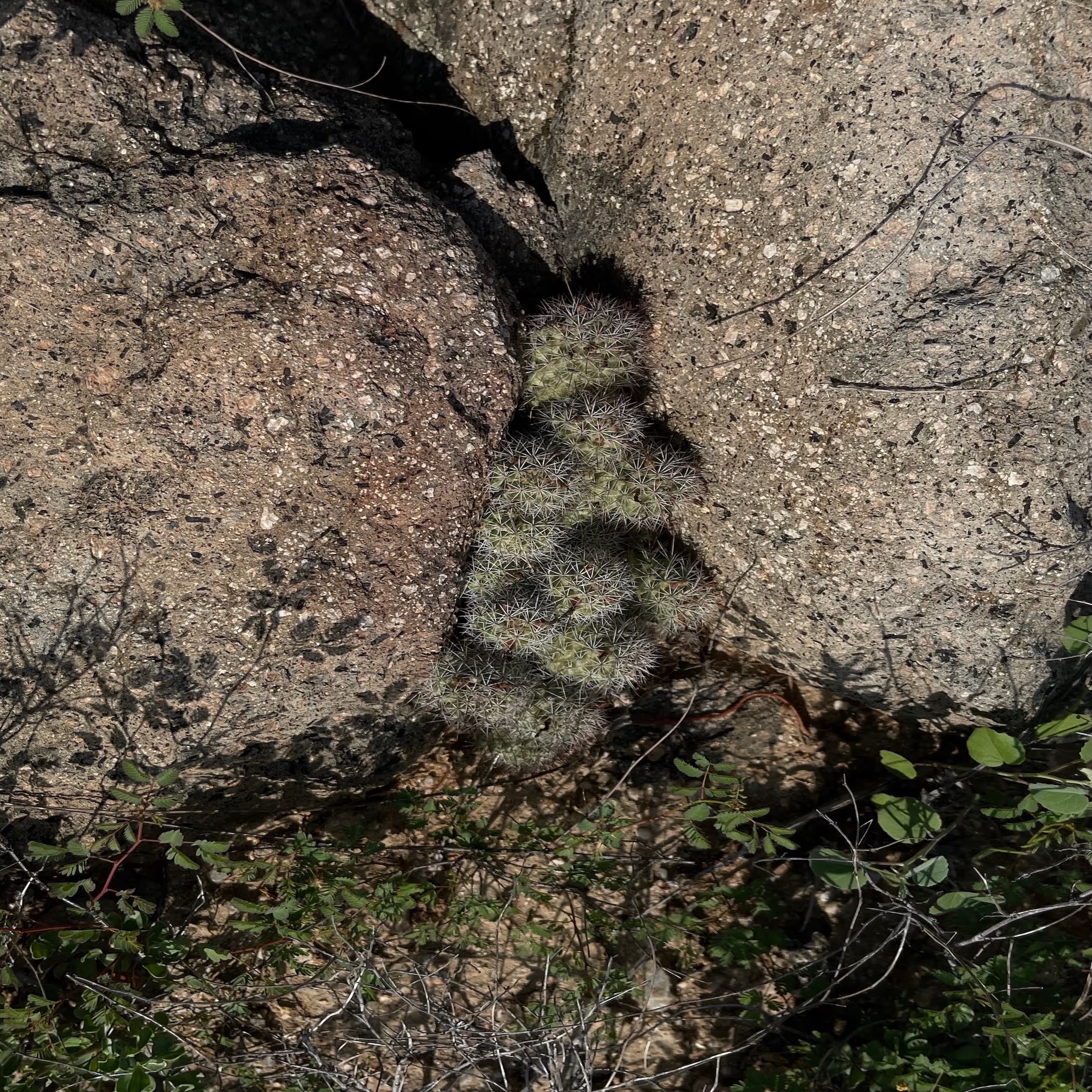
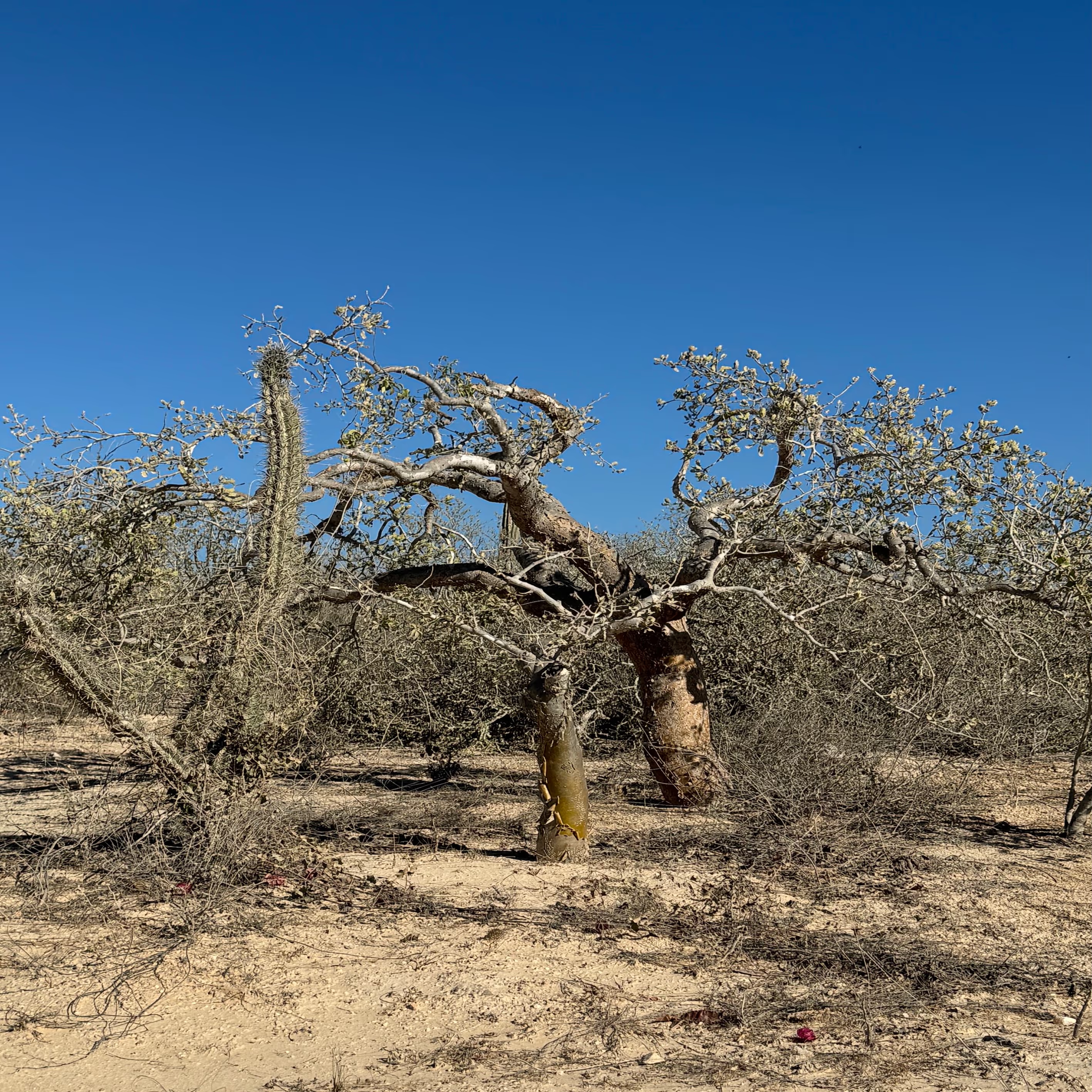
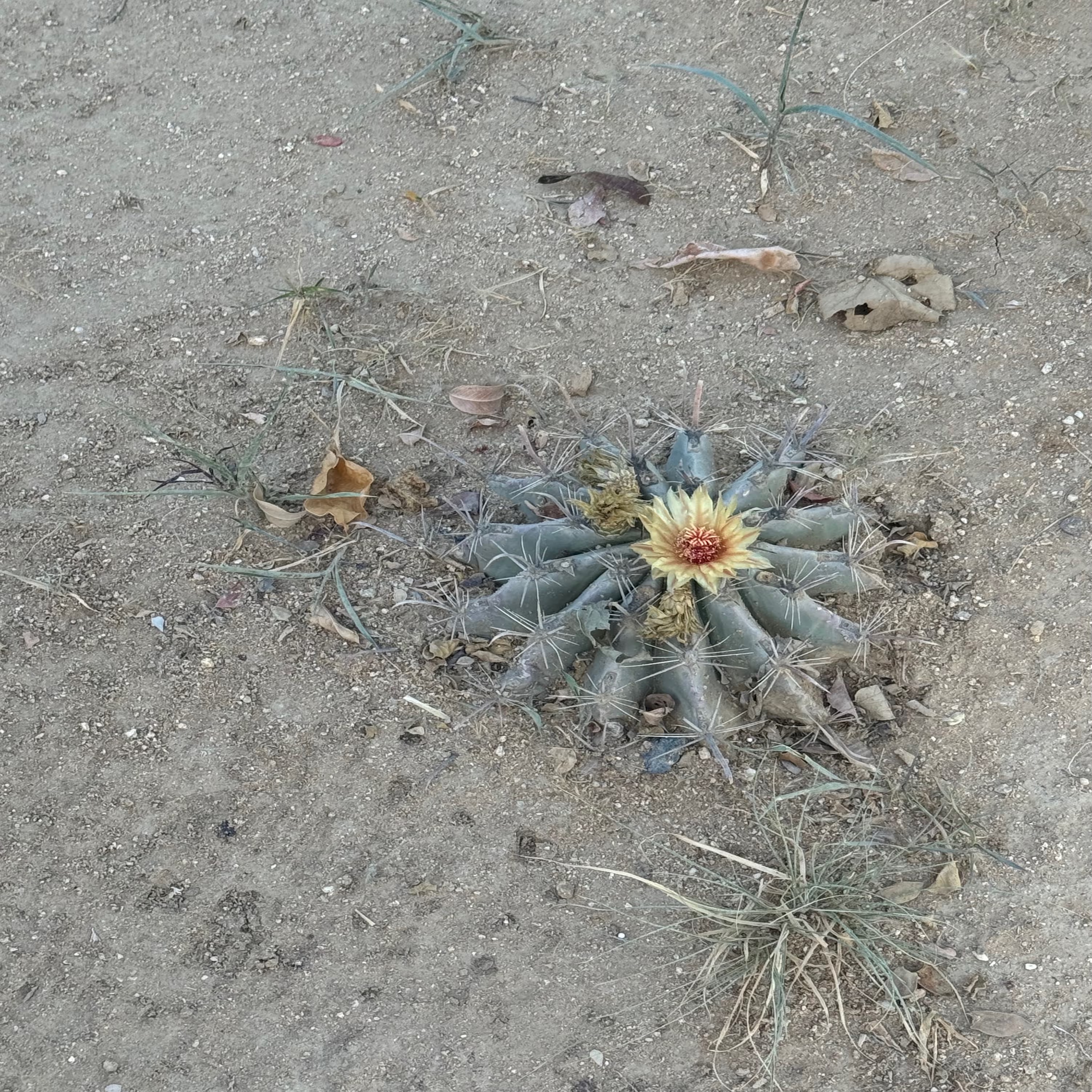
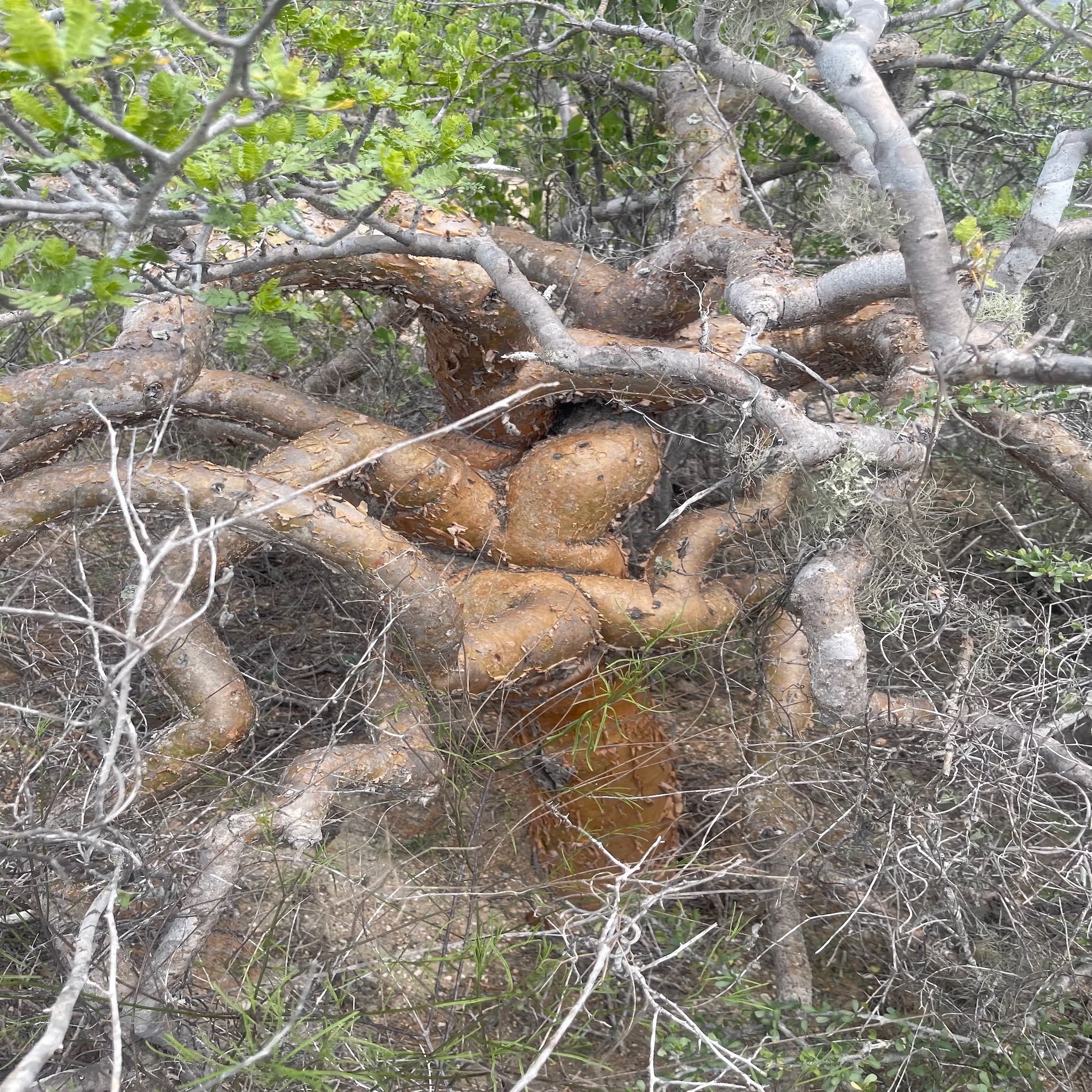
Take a Pachypodium. That swollen caudex isn't an aesthetic accident. It's the result of millions of years of adaptation to a climate that delivers months of rain and then nothing; an organism that stores water in its own tissue because the alternative was extinction. The spines aren't decorative either. They're a defence response developed under pressure from specific herbivores in a specific landscape. The CAM photosynthesis (CAM is actually named after crassulaceae: crassulacean acid metabolism) many of these species use. Fixing carbon at night to reduce water loss during the day, is a physiological workaround for heat and drought that took an enormous amount of evolutionary time to develop. Every structural decision that plant has made is a record of the pressures it evolved under. You're not just looking at a plant. You're looking at a detailed response to a particular environment over a very long time.
That's true of almost everything growing around you, not just the rare and exotic. A weed pushing through pavement is making a series of sophisticated decisions about light, water, and soil chemistry. A euphorbia on a limestone outcrop has developed tolerance to alkaline, nutrient-poor conditions that would kill most things, often through specialised root associations with soil microbes that make phosphorus accessible where it otherwise isn't. Once you understand that plants are not passive, that they are constantly solving problems, the world starts to look different.
When you're plant blind, you miss all of that. And that's not a small thing.
Learning to look
Breaking out of plant blindness isn't about becoming a naturalist overnight or filling your space with trendy foliage. It starts simpler than that; slowing down long enough to actually observe. The shape of the leaf. The structure of the stem. Where it's growing and what that tells you about what it needs. This kind of attention is a practice, and it compounds. The more you know, the more you see.
For cultivators working with difficult species, this shifts from observation into diagnosis. You're reading a plant to understand whether your conditions are right, checking root health when repotting, watching for the subtle signs of stress that show up in growth rate or leaf texture before anything more obvious happens. Understanding what a plant looks like when it's thriving versus when it's merely surviving takes time, and it requires a baseline understanding of what the species is actually adapted to. Habitat context matters here. A plant from a seasonally dry environment doesn't need the same watering cadence as one from a humid highland. Getting that wrong consistently is how plants decline slowly and growers can't work out why.
There's a specific moment most serious growers can point to — the first time a plant stopped being a plant and became legible. When the logic of a growth pattern clicked. That doesn't come from reading about plants. It comes from spending enough time with them that the details become visible. It's less like learning a subject and more like building a working vocabulary.
There's something that happens when you start engaging with plants at that level, a practical understanding develops. You start to recognise that these organisms are responding to their environment constantly, managing stress, adapting. They have their own “strategies”. They have limits. Understanding that changes how you approach cultivation, and it changes what conservation actually means to you. It's hard to be indifferent to something once you've learned to read it.
On patience
Plants don't rush. They grow on their own timeline, in response to conditions you can influence but not control. And if you're serious about cultivating difficult species — the slow-growing, the particular, the genuinely hard to come by, you encounter this very quickly. Forcing the process doesn't work. A seedling that's stressed won't be hurried. A dormant caudex won't break early because you want it to. You create the right conditions, you pay attention, and you wait.
For a lot of people, this is the hardest part. We're not used to processes that don't respond to effort in a linear way. But it's also one of the more valuable things that serious cultivation teaches you; that growth has its own schedule, and your job is to understand it rather than override it. There's a particular satisfaction that comes from a plant that takes three years to do something interesting. You earned that in a way you didn't earn the fast ones.
It's a useful way to approach most things, not just horticulture.
Why this matters for LESCSS
The Lower East Side Cactus & Succulent Society was built by people who stopped being plant blind and couldn't go back. Once you start actually seeing what's growing around you, really understanding it, you want to be around others who see it too. That's what this community is.
The species that bring most of us together; the malagasy endemics, the habitat-specific euphorbias, the ones not seen genuinely very often, are under real pressure in the wild. Being part of a society like this means being part of something that takes that seriously. Sharing knowledge, growing carefully, and making sure the plants in our care are genuinely understood, not just owned.
None of that starts with a purchase. It starts with paying attention. And if you've read this far, you're probably already doing it.
Instagram: @thickphoot